

Whining about the futility of younger generations is a rite of passage. The young grow up listening to their elders talk about how much harder things were in their day, only to turn around and say the same thing about anyone even slightly younger than themselves. It’s natural. Everyone wants the focus to be on their own problems, the ones they believe they were uniquely qualified to overcome. Everyone is the hero of their own story. These are the tales we like to tell ourselves.
Nothing shatters that image faster than a humbling moment that forces you to accept you might be less capable than you thought. I had such an experience this weekend.
Our space heater stopped working just before my in-laws were to arrive for the holidays. Eager to get it fixed, my wife called an electrician while I was traveling. He quoted over $1,000 for what he claimed was a ten minute job.
Unwilling to pay that price, she decided to wait until the man of the house returned, expecting I would be up to the task. Nobody would confuse me for blue collar but I’ve accomplished things in my life. How hard could changing a space heater be?
We went to Home Depot and bought a similar unit. While unboxing it, I noticed the instructions were missing, but that didn’t discourage me. I began by removing the old unit from the wall with my bare hands. I tried to gently separate it from the wall mount. I blinked, and suddenly the entire unit, along with the mount, was on the floor, surrounded by a small mound of drywall.
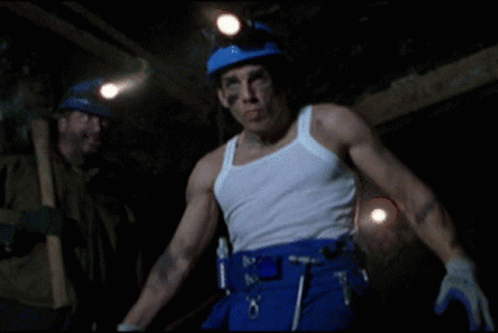
Was I unaware of my own strength? Perhaps it had been poorly installed. In any case, the old unit was off, but now there were some exposed wires. None of them seemed to match the heater we just bought. I consulted ChatGPT. It was unhelpful. So I turned to an even more knowledgeable source. My dad.
My father also spent his career in white collar roles, but he usually knew how to fix things. If not, he knew enough to call a professional when it was needed. He came by the next morning and confirmed a component was missing but after a few hours of work, we managed to install a new heater.
Standing around pleased with ourselves, we then realized the second heater had stopped working. It turned out it was designed to operate in tandem with the unit I ripped off the wall. The replacement was not compatible. The job, it seemed, was less finished than we thought.
Nonetheless, I was grateful for my father’s help. As I reflected on the experience, I wondered who I would have called if he hadn’t been available. The overwhelming majority of my friends are like me, white collar professionals and relatively new homeowners. Those of us that own our homes.
Some are more handy than others, but none would describe ourselves as confident when it comes to home repairs. Some can manage basics, minor installations, hanging paintings, that sort of thing. I have other friends that I genuinely wonder if they’ve ever changed a lightbulb? Some probably think a Phillips screw is a wrestling move.
Is this just my circle, or do Millennial and Gen Z know less about home repair? Ask any old person or the internet and the answer is obvious. My research indicates the answer is less straightforward.
Keep Reading To Learn If Young People Are as Useless as Old people say!
But first, make sure to hit the Subscribe button to join 1,000+ other Subscribers that get Serviceable Insights delivered directly to their inbox each week.
If this week’s article does not interest you, please check out some other recent ones:


Are Millennials and Gen Z Less Handy?
The answer is unclear. There is conflicting data and reports but the general anecdotal consensus appears to be that Millennials and Gen Z are less involved in home repair and maintenance compared to Boomers at the same age.
There isn’t one conclusive explanation as to why. Reddit will suggest some combination of lower exposure, confidence and willingness. Whether these are valid or not, the belief is that young people are less likely to be involved in home maintenance compared to previous generations at the same age.
The elderly agree. Ask any grandparent and they’ll probably whine about how young people are overly coddled. While they were forced to walk uphill to and from school each day, their children had to be dropped off by car. After a few whiskeys they might mumble that men haven’t been the same since Vietnam while they drift off in front of a Ken Burns documentary. Who is to say which truth is more valid?
Although I’m not convinced by the data, if we assume this is true, some part of this could be explained by the higher proportion of millennials and Gen Z attending university and working in white collar roles. If fewer people work in professions requiring some type of manual labor, home repair knowledge would have to be self taught or from friends/family members. If each successive generation does less manual work than the previous one, it becomes harder for this information to get passed down. This is why despite vastly more access to information, the average person knows way less about farming than our ancestors.
Although with plenty of Do It Yourself (DIY) Repair sites, Youtube and now ChatGPT, it should be easier to take care of household repairs. Anyone with an internet connection, can access a step by step guide for minor repairs. They just can’t physically stop you if you are about to drill through a pipe or set your house on fire.
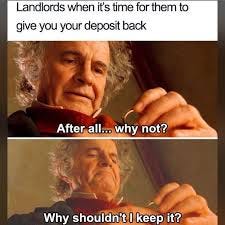
That is, if it’s even your place. Young people are far less likely to own their homes than Boomers or Gen Xrs at the same age. Millennials and Gen Z are generations of perpetual renters, and attempting a repair might not be worth the risk. If there’s a problem, it’s technically the responsibility of the landlord. If the renter messes up attempting a repair, they lose their deposit. They take all the downside risk, while saving money for the owner, none of which trickles back to them.
Adam Neumann believes the solution is to make renters feel like owners. Except his version does not include giving them any equity. Following his departure from WeWork, he launched another real estate startup called Flow. Flow acquires and rents out apartments to tenants. They use some buzz words related to technology to justify software valuations but from all intents and purposes, they seem like a commercial residential real estate firm. Where have I seen this before?
In any case, Flow believes by bundling apartments, amenities and the concept of a community, renters will want to make their own repairs.
“If you’re in an apartment building and you’re a renter and your toilet gets clogged, you call the super,” . If you’re in your own apartment, and you bought it and you own it and your toilet gets clogged, you take the plunger. That’s the difference, when feeling like you own something.” — Adam Neumann, 2023
Neumann was mocked when he made this comment a few years ago but whether you believe renters would want to fix their own toilet or not, investors had enough confidence in Neumann to invest $350M. A16z made another follow-on investment earlier this year, bringing Flows valuation to a reported $2.5 Billion.

Before Flow launched, there were already rent to own startups such as Divvy available on the market. They provide renters with ability to build equity or eventually purchase their rental apartments. Divvy was acquired for around $1B earlier this year, well below its peak valuation north of $2B in 2021. Therefore Andreessen must believe Flow’s approach has significant upside.
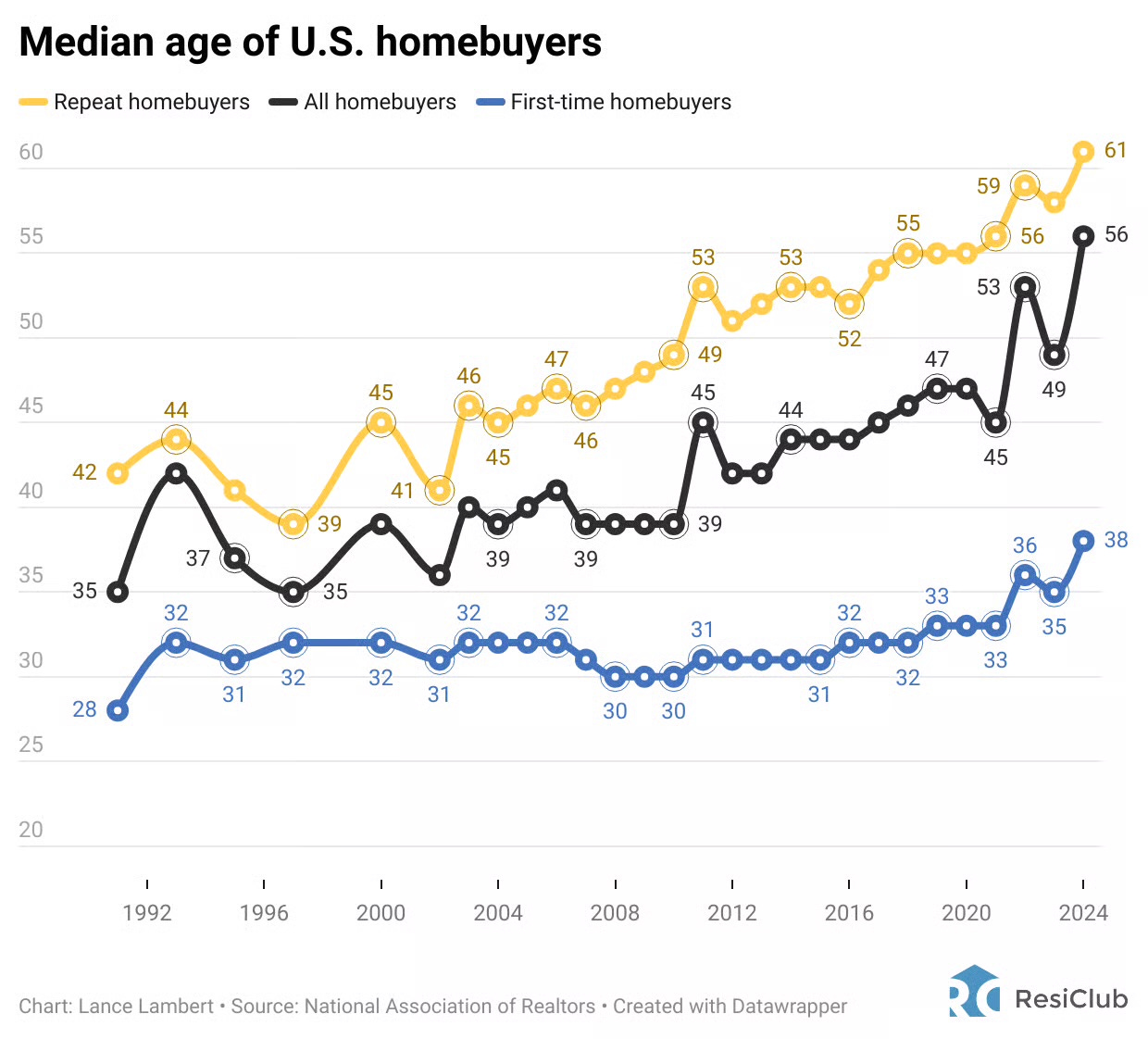
In any case, virtually everyone will be a renter at some point in their life, but pawning off home repairs on the landlord should only be a temporary solution. Yet the median age of first-time home buyers has climbed from 28 to 38 in the last 30 years. With young people having a more difficult time purchasing homes, and more believing they will never be owners, are they incentivized to ever learn?
What about the people that manage to become homeowners? Surely, it’s too expensive to hire a professional for every small job, why aren’t they willing to fix things like their baby boomer parents/grandparents? Were the boomers built different? I’m sure they would like to think so but perhaps the problem has nothing to do with home repair, but rather a disconnect between the realities of each generation.
Men and women face different challenges, and spend time differently than their elders. With technology we don’t need to spend half of our day maintaining the house; the dishwasher and washing machine save us countless hours. Although your old fashioned Italian Nona might not like it, childcare is no longer exclusively a female responsibility. Men and women are more involved in child rearing than ever before.
Older generations may not view this as work in the traditional sense, but it’s an enormous time commitment. Between spending time with their children or patching drywall, parents prioritize their kids. If something has to give, it’s often the infrequently utilized skill that can be outsourced, delayed, or ignored until it becomes unavoidable.
![OC] Time that fathers and mothers spend with their children (1965-2010) : r/dataisbeautiful](https://substackcdn.com/image/fetch/$s_!h65b!,f_auto,q_auto:good,fl_progressive:steep/https%3A%2F%2Fsubstack-post-media.s3.amazonaws.com%2Fpublic%2Fimages%2F60f9d206-b07b-47b7-b2a5-81df95bcf778_1812x1454.png "OC] Time that fathers and mothers spend with their children (1965-2010) : r/dataisbeautiful")
This creates a distorted comparison. Previous generations remember the skills they developed but forget the time and social structure that made acquiring them easier. Today’s younger homeowners might not know how to repair a wall, but they are navigating dual income households, higher career intensity, longer working hours, and a parenting culture that demands constant engagement. Oh! and how to save a file as a PDF. The skills that get rewarded have changed, even if the nostalgia has not.
Every generation believes it faced tougher circumstances because it lived through them. Everyone else’s struggles are theoretical, filtered through anecdotes and selective memory. It is easier to believe we were uniquely capable than to accept that circumstances shape competence. Skills follow incentives. When the world changes, so do the skills that matter.
So no, young people are not useless. They are simply optimized for a different set of problems. I will continue to call my father when something breaks, and neither he or you should judge me for it. If adulthood is defined by self sufficiency in all domains, then no generation has ever truly qualified.
Thank you for reading. If you liked this article please Subscribe below. I publish articles on a wide range of topics from business, books, current events or anything on my mind.
There's a strong survivorship bias type of thing going on here when we perceive of older generations as more handy than younger generations. We see older men as handy because they've had a whole lifetime of experience, and they easily could've been just as inexperienced and foolish when they were younger. It's like how people think that stuff used to be build better in the past, but they're forgetting that all the stuff that was build poorly back then didn't survive to today so that we could accurately gauge exactly how well things used to be built on average.
Now, with that sadi, I do think that it's both true that men today are less handy than men were at their age in the past and that stuff is build worse today than it was in the past.
Every generations will have its own perks and pecularities, just accept it and move on...