
What's The Difference Between Pickleball, Padel & Tennis?
Not all racket sports are created equal

There I was on the fourth floor of a downtown building, enclosed in a glass cage under bright fluorescent lights. Balls were ricocheting in every direction while my teammate and I tried to avoid crashing into each other, or the wall, as we attempted to send one back over the net.
I found myself in the middle of a padel game with a few longtime Substack subscribers. Nick had been playing for a while and served as our rules official. Phil had played a few times before and, after a quick refresher, was back up to speed. For Tim and me, it was our first time, but we had both played other racquet sports before.
We were all fine sportsmen, but experience made a difference. I’m more accustomed to tennis, which usually doesn’t have a wall a few feet behind the baseline. The first time I tried to play a ball off the glass, I was lucky it didn’t careen directly into my face.
After a few games, I started to figure it out. Plenty of my attempts to use the wall still failed, but enough worked that it was worth to keep trying without being a complete liability to my team. We played a few matches with different pairings, and the games were all close. Until Tim and I were paired together. Then things went less well. Fortunately, our reservation expired saving us from further embarrassment.
Our booking ended at 8:30PM but there was a long line of people waiting to take the court. The place was packed on a Wednesday in the middle of summer. Although padel is nowhere near as popular as tennis, it has surged in recent years. When I first heard about it in 2009, I assumed it was a niche Spanish sport. Today, more than 30 million people play, mostly across Europe and South America.
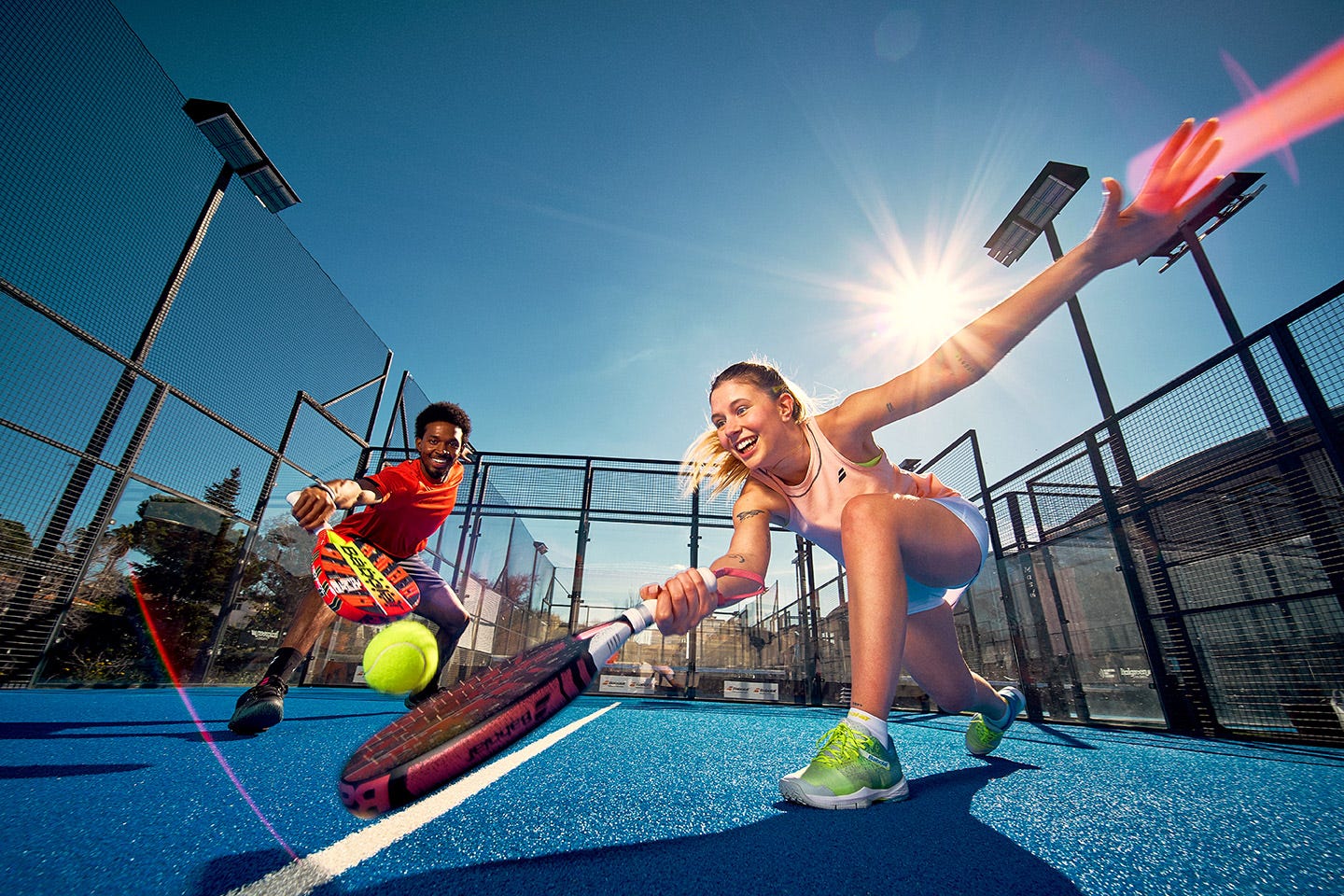
(None of Nick, Phil or Tim are featured in this photo)
In North America, few people are playing padel, choosing to embrace pickleball instead, another more accessible variation of tennis.
Since most of my readers probably do not know how these sports differ, this week’s article is intended to explain the distinctions.
Keep reading to learn which racket sport is best suited for you!
Book I’m Currently Reading:
1873: The Rothschilds, the First Great Depression, and the Making of the Modern World by Liaquat Ahamed
*Note: To ensure you don’t miss my emails please star or reply to this message
In case you missed them, here are some other recent articles to check out:


Tennis: Ever Heard of it?
Tennis originated from jeu de paume, a game played by French monks between 11th and 12th century. French speakers can guess it involved striking the ball with their hands. It gradually shifted to gloves, bats and eventually racquets. The game caught on and spread to European royals and Aristocrats. Those with a lot of free time.
Modern tennis only emerged in the late 19th century. Credited to a British army officer, Walter Clopton Wingfield, who started selling boxed lawn-tennis sets in 1873. The scoring system and the some of the other rules were revised shortly after but it wasn't until the All England Club held the first Wimbledon tournament in 1877 that there was an official unified set of rules.
Tennis can be played in singles or teams of two (doubles), using a strung racquet to hit a felt-covered “tennis” ball across a net. The ball can bounce once before it must be returned. The player serving stands behind the baseline and has two attempts to get the ball diagonally into the designated service box. A player wins the point if their opponent can’t return the ball in bounds. This is more or less the same premise of all racket spots, including padel and Pickleball.
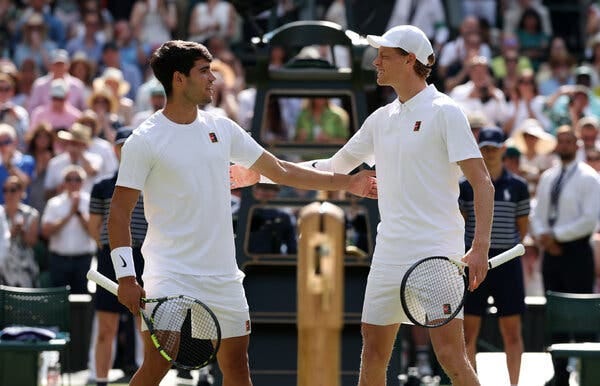
A tennis match is best of 3 or 5 sets, of at least 6 games. A player needs to win 6 games, by at least a margin of two to take the set. A set can go to a maximum 13 games. To win a game, you need at least 4 points with a margin of victory of 2. Instead of counting to 4, for some reason points are counted as 15, 30 and 40. If both players reach 40 points, the score becomes deuce, and the players go back and fourth until somebody wins two consecutive points.
More than 100 million people play tennis every year. Roughly one-third live in the US, UK and Canada, while another third are in Asia. Most of the remaining players are concentrated in Europe and Latin America. For much of the 21st century, tennis participation grew roughly in line with the global population. That changed since the pandemic, with the worldwide player base increasing by approximately 25% between 2019 and 2024.
Beyond participation, people love to watch; professional tennis generates more than $3B per year, with over a billion spectators. Well below Football (European and American), Baseball, Basketball and Hockey, in line with F1 and more than MMA.
Tennis is an exciting game but it’s not seen as accessible given the athletic demands. Once the ball is served, you are pretty much sprinting, stopping and starting until the point is over. Anyone I know who plays regularly over the age of 30 is constantly nursing some sort of injury. The disparity in skill makes it difficult for beginners to play with more experienced players. There isn’t a handicap equivalent such as in golf. I suppose you can force the better player to wear a blindfold or consume a few alcoholic beverages, but even that might not be enough. Karsten Braasch beat Serena and Venus Williams easily after a few beers and cigarettes. Other racket sport derivatives are more accessible.
Padel: Tennis inside a glass case of emotion
A wealthy Mexican businessman wanted to build a tennis court, but didn’t have space so he needed to settle for a smaller one, with walls probably to prevent the ball landing into his neighbours yard. Eventually instead of playing around the walls, he decided to incorporate them into the game to compensate for the smaller court, giving the game an added element of strategy. It was a niche game he would play with friends until one of those pals brought the game to Spain in the early 1970s. The game spread to Argentina which saw a surge in popularity in the 80s and 90s, making it the main hub for padle outside of Spain.
Padel is played in doubles on an enclosed court measuring 20 metres long and 10 metres wide, instead of 24x11 on a tennis court. Players use a short, solid racquet with holes cut into the face instead of strings. The ball looks almost identical to a tennis ball but with less pressure causing it to travel more slowly. The serve works the same as in tennis with the only difference that the server first bounces the ball, then strikes it underhand below waist height, instead of overhead.
Beyond that the key difference is how the walls come into the play. The ball must first bounce on the opponent’s side of the court, but it can then strike the surrounding glass or fencing and remain in play. A player can allow the ball to rebound off the wall behind them before returning it, or deliberately hit the ball against their own glass to send it over the net. This changes how you hit the ball.
In tennis you are generally try to hit shots with top spin to put the ball out of your opponent's reach. In padel, those kinds of shots take harder ricochet's off the wall making them easier to return. Instead you would rather use backspin, so the ball falls into the corner eliminating any chance to play it. This subtle change along with the underhand serve reduces the advantage stronger/powerful players have in tennis.
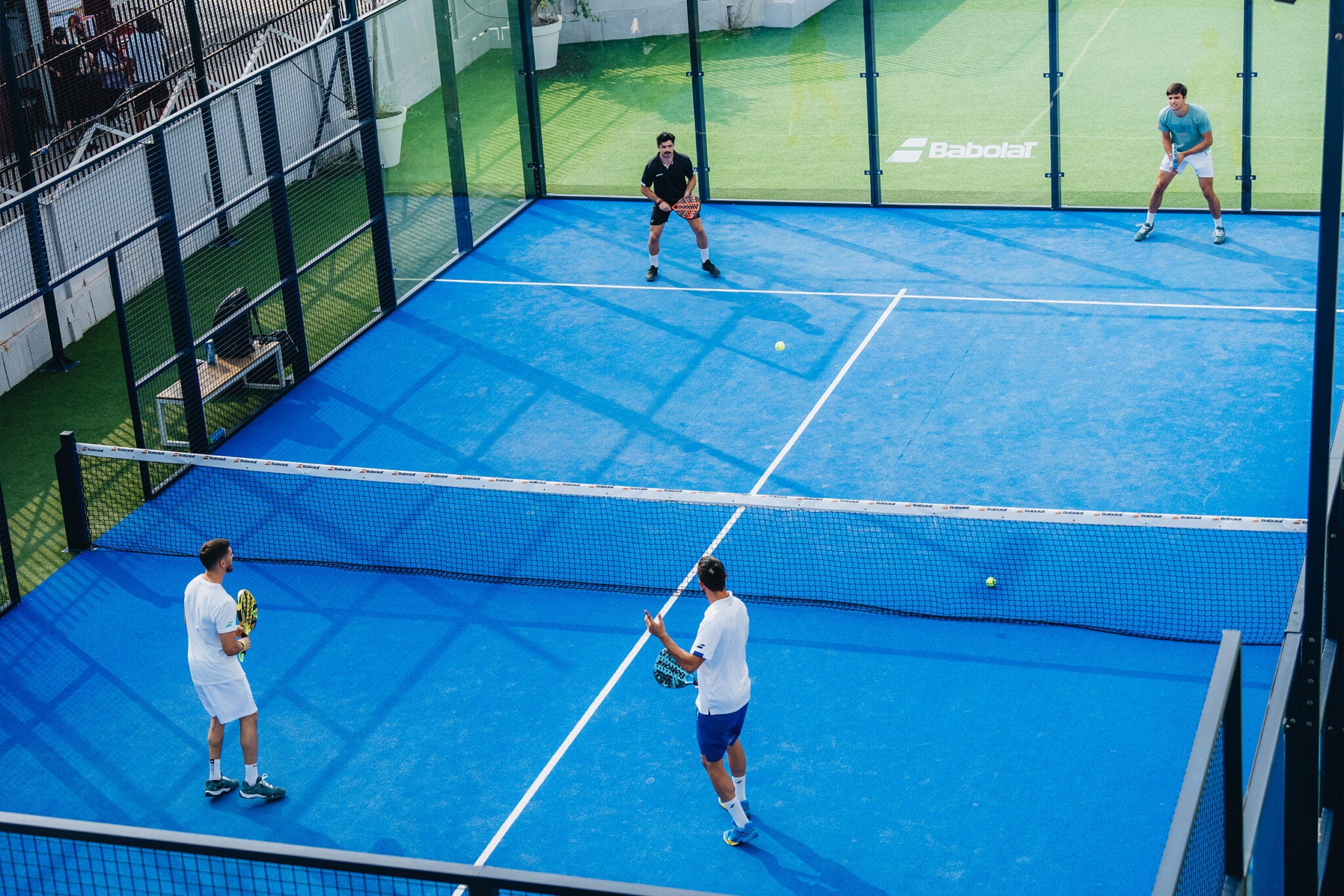
Although it’s not as popular as tennis, the sport is growing at a staggering rate. In 2018, there were only 8 million players, by 2025, this jumped to 35 million and has plenty of room to grow. 80% of the players are in Europe and South America, with North America and Asia still largely untapped.
It’s not a surprise, the format makes it more accessible and social. The doubles format on the smaller court allows for more communication between points, and reduces the amount of running, since each player only covers half of their side of the court. The carryover from tennis, and other racket sports, make it easier for new players to quickly pickup the game without the same risk of injury. There is clearly a huge demand for this, as evidenced by similar emerging racket sports.
Pickleball: Ping-Pong for Claustrophobics
If padel is a mix of tennis and squash, pickleball is tennis mixed with ping-pong.
Pickleball was invented around the same time as padel, but in the US. It’s played on a much smaller court measuring 6 by 13 metres. The rackets are similar to paddle but the ball is made of plastic reducing the speed even further.
Like padel, the ball is served underhand, except the server does not need to bounce it first. The serve and the return must each bounce once before either team is allowed to volley. Beyond that, the basic objective is similar to tennis, padel or ping-pong: get the ball over the net and hope the other person misses.
Another key difference is that players can’t volley in the first seven feet before the net. This area is known as the kitchen. Players can enter it to return a ball after it bounces, but can’t wait inside to smash the ball out of the air. No cooking happens there.
Pickleball also has a more simple scoring system. Games are played to 11 points, and a player or team must win by two. Only the serving side can score. In doubles, both partners serve before possession passes to the opposition.
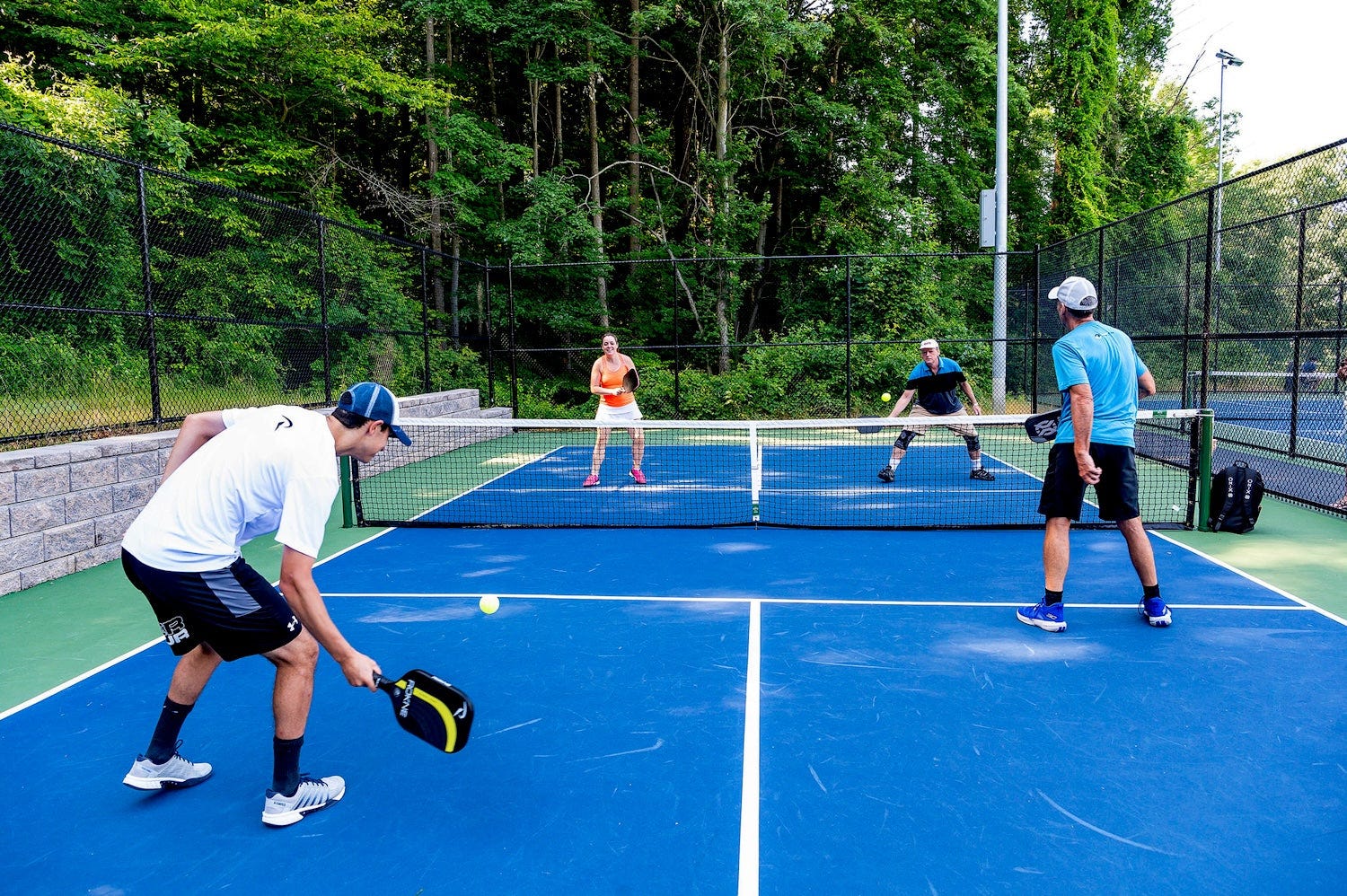
The smaller court and slower ball reduce the athletic demands even further than padel, let alone tennis. This makes pickleball ideal for older, less athletic players, or anyone looking for something more physically demanding than ping-pong without risking an injury from tennis. This is why some dismiss it as a sport for retirees, but it’s increasingly enjoyed by every age group. Former pro tennis players such as Jack Sock, Genie Bouchard and Sam Querrey have transitioned to professional Pickleball. Not to mention, former greats like Andre Agassi, Andy Roddick and others who occasionally pop in for celebrity games. They don’t help dispel the stereotypes though.
This accessibility explains why the sport’s growth has been extraordinary. In 2020, slightly more than 4 million people played pickleball across North America. By 2025, that figure reached 26 million. This is where the majority of players reside, as Pickleball isn’t as international as tennis or padel yet.
Nonetheless, each sport is surging these past few years, as people are looking to spend more time with friends hitting a ball around. The size of the court, type of racket and material of the ball are less important.
Thank you for reading this weeks article. Please let me know your thoughts by commenting below